
The Unseen Hero: A Homeowner's Guide to Retaining Wall Drainage in the Okanagan
A beautifully crafted retaining wall can transform a sloped property, creating functional, elegant tiers for patios, gardens, and driveways. Here in the Okanagan, where many homes are built on our beautiful benchlands with stunning views, retaining walls are more than just an aesthetic choice—they're an essential structural element. But the biggest threat to their longevity isn't something you can see. It's the immense power of water, building up silently behind the wall. Without a proper drainage system, even the most robust-looking wall can fail, leading to costly and dangerous problems. Understanding how to manage water is the key to ensuring your hardscaping investment lasts a lifetime.
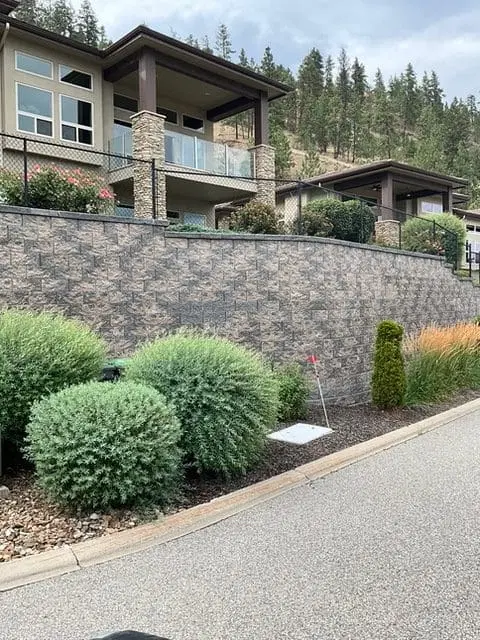
The Force of Nature: Understanding Hydrostatic Pressure
Imagine the soil behind your retaining wall as a giant sponge. After a heavy spring rain or a rapid snowmelt, this sponge becomes saturated with water. With nowhere to go, the water exerts incredible force against the back of the wall. This is called hydrostatic pressure, and it's the number one cause of retaining wall failure.
When hydrostatic pressure builds, it can cause a wall to:
- Bow or bulge: The middle of the wall starts to push outwards.
- Crack: Vertical or horizontal cracks appear as the structure is stressed beyond its limits.
- Lean or tilt: The entire wall begins to shift forward from the top.
- Collapse: In the worst-case scenario, the pressure leads to a complete structural failure.
In our climate, which swings from hot, dry summers to periods of intense precipitation, the soil expands and contracts. This movement, combined with hydrostatic pressure, puts immense strain on a retaining wall. A system designed to relieve this pressure isn't just a feature; it's a necessity.
The Anatomy of an Effective Drainage System
So, how do we fight back against this powerful force? A properly designed retaining wall incorporates a multi-layered system that gives water an easy escape route. It’s not just one component, but several working in harmony. Here are the essential elements we build into every project:
-
Granular Backfill: We never use the native soil directly behind the wall. Instead, we use a layer of clear-crush gravel or a similar granular material. This creates a porous zone where water can flow freely downwards instead of pushing against the wall.
-
Perforated Drain Pipe: At the base of the wall, nestled within the gravel backfill, we install a perforated pipe (often called a weeping tile). This pipe collects the water that filters down through the gravel and carries it away to a safe exit point, either through weep holes in the wall's face or by daylighting at the end of the wall.
-
Geotextile Filter Fabric: This is a crucial, often overlooked, component. We wrap the geotextile fabric around the gravel backfill, separating it from the native soil. This durable fabric allows water to pass through but prevents silt and clay from migrating into the gravel, which would eventually clog the entire system and render it useless.
When these components are installed correctly, they create a clear path for water to travel down and away from the wall, effectively relieving the hydrostatic pressure and keeping the structure stable and secure for decades.
Beyond the Wall: Smart Surface Water Management
A great drainage system behind the wall is only half the battle. We also need to consider the water coming from the surrounding landscape. The ground surface above the retaining wall should always be graded to slope away from it. This simple step prevents surface water from pooling and saturating the soil in the first place.
Furthermore, we look at the bigger picture. Are there downspouts from your roof emptying near the wall? Is the area part of a natural drainage path on your property? A holistic approach ensures that your retaining wall is integrated with your property's overall water management plan. This is especially important when the wall is supporting a critical structure like a driveway or a beautiful paving stone patio, as the stability of both depends on keeping the ground beneath them dry and secure.
Why Professional Expertise is Non-Negotiable
It can be tempting to cut costs on a large hardscaping project, and unfortunately, drainage is one of the first places underqualified installers look to save money. They might skip the filter fabric, use the wrong backfill material, or improperly grade the site. These shortcuts will inevitably lead to failure down the road, resulting in repairs that are far more expensive than doing the job right the first time.
Building a retaining wall that lasts requires a deep understanding of local soil conditions, proper engineering principles, and meticulous installation practices. It's an investment in your property's safety, functionality, and value.
At Acland Contracting Inc., we specialize in building structural hardscapes that are engineered to withstand the unique challenges of the Okanagan landscape. If you're planning a project and want to ensure it's built to last, we're here to help.
Ready to discuss your retaining wall or hardscaping project? Contact us today for a professional consultation and let's build something beautiful and durable together.