
Taming the Slope: Your Guide to Retaining Walls on Okanagan Benchland Properties
Living on the benchlands of the Okanagan offers some of the most stunning views in British Columbia. From the sparkling waters of Okanagan Lake to the rolling hills of wine country, it’s a landscape many of us are proud to call home. But with that beauty comes a unique challenge: gravity. The very slopes that provide those incredible vistas can also pose a significant risk to your property through soil erosion and instability. For homeowners in Kelowna, understanding how to manage a sloped yard isn't just about aesthetics; it's about protecting your most valuable investment.
A shifting slope, creeping soil, or water runoff can undermine patios, threaten foundations, and limit the usable space in your yard. The solution is often a structural retaining wall—a feature that does far more than just hold back dirt. A properly engineered retaining wall stabilizes your property, prevents costly erosion damage, and can transform an unusable incline into a stunning, functional outdoor living area. As specialists in large-scale hardscaping projects, we've seen firsthand how a well-built wall can provide both peace of mind and a foundation for your dream backyard.
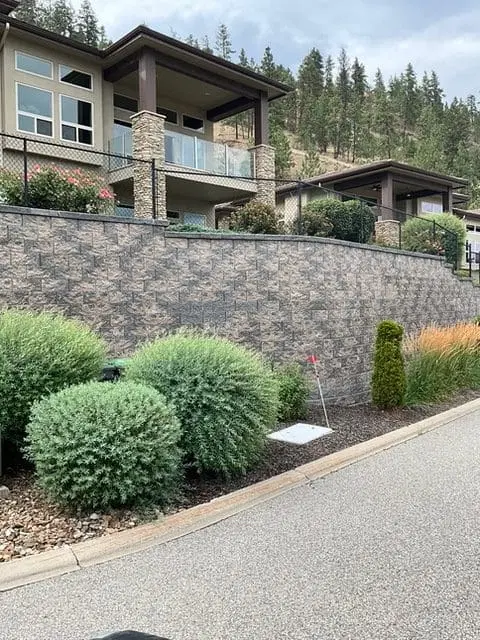
Why Slopes on Benchland Properties Need Special Attention
The unique geology of the Okanagan Valley, a product of ancient glaciers, has left us with layers of sand, silt, and gravel. While this soil is great for growing grapes, it can be notoriously unstable on a slope. When you add water from spring snowmelt, heavy rainfall, or even landscape irrigation, the risk of erosion increases dramatically.
Homeowners should be aware of the subtle warning signs of slope instability:
- Surface Cracks: Small fissures appearing in the soil or on existing patios and walkways.
- Leaning Structures: Fences, posts, or even small, older retaining walls beginning to tilt downhill.
- Soil Creep: A gradual downhill movement of soil, often noticeable at the base of a slope or against the foundation of your home.
- Water Pooling: Inadequate drainage can saturate the soil, increasing its weight and pressure, which is a primary cause of wall failure.
Ignoring these signs can lead to more significant problems down the road. Addressing slope stability proactively is key to preserving your property's integrity and value.
The Difference Between a Garden Wall and a Structural Solution
It’s crucial to understand that not all walls are created equal. A small, decorative garden wall that’s a foot or two high is very different from a structural retaining wall designed to hold back tons of earth. A structural wall is an engineered system that must be built to withstand immense pressure, known as hydrostatic pressure, which builds up from water in the soil behind it.
Three components are non-negotiable for a durable, structural retaining wall:
- A Solid, Compacted Base: The foundation is everything. A proper wall requires excavation to stable, undisturbed soil and the installation of a deep, compacted gravel base to prevent shifting and settling.
- Comprehensive Drainage: This is the most critical element. A system of weeping tile, clear-crush gravel backfill, and filter cloth is installed behind the wall. This allows water to drain away freely, relieving the pressure that would otherwise push against the wall and cause it to fail.
- Geogrid Reinforcement: For taller walls, a high-strength polymer mesh called geogrid is layered within the backfill and anchored into the wall blocks. This creates a reinforced soil mass, effectively tying the wall to the earth behind it and dramatically increasing its strength and stability.
In British Columbia, any retaining wall over 1.2 meters (about 4 feet) in height typically requires a building permit and a plan stamped by a geotechnical engineer. This isn't just red tape; it's a safeguard to ensure the wall is designed to handle the specific soil conditions and loads of your property.
Choosing the Right Materials for Durability and Style
While function is paramount, you also want a retaining wall that complements your home and the natural Okanagan landscape. Fortunately, modern materials offer both strength and beauty.
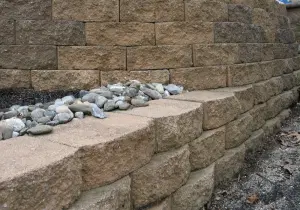
- Segmental Concrete Blocks: These are the most popular choice for engineered retaining walls. Brands like Allan Block are designed with interlocking mechanisms and a hollow core that gets filled with gravel, creating a powerful, flexible, and cohesive structure. They come in a wide variety of colours, textures, and sizes to match any aesthetic.
- Natural Stone: For a timeless look that blends seamlessly with the environment, nothing beats natural stone like local basalt. While often more labour-intensive to install, a natural stone wall is incredibly durable and offers a unique, high-end finish.
Our process always begins with an on-site consultation to assess your property's specific needs. We evaluate the slope, soil type, and your ultimate goals for the space. From there, we collaborate with engineers to develop a precise plan, ensuring every aspect—from the depth of the foundation to the drainage system—is designed for long-term stability. We provide a transparent, detailed quote so you understand the full scope of the project, and our specialized crews maintain clear communication with you from start to finish.
Protect Your Property and Unlock Its Potential
A sloped yard doesn't have to be a liability. With the right approach, it can become your property's greatest asset. An engineered retaining wall is a fundamental investment that provides security, prevents erosion, and creates level, usable tiers for patios, gardens, or even a pool deck—perfect for the Okanagan outdoor living lifestyle.
If you have concerns about a slope on your property or are looking to reclaim your yard, don't wait for a small problem to become a big one. Contact Acland Contracting Inc. today for a professional consultation. Let our expertise in structural retaining walls provide the foundation for a safe, beautiful, and functional landscape you can enjoy for years to come.