Coordinating Retaining Walls with Inground Pool Installation
Transforming your backyard into a personal oasis is a dream for many homeowners, especially when the warm summer months arrive in Kelowna. A beautifully designed swimming area provides the perfect escape, a place to entertain friends, and a focal point for family memories. However, our unique local geography often means that creating this dream isn't as simple as just digging a hole. Many properties in our region feature significant slopes and tiered elevations, which requires a thoughtful approach to outdoor design.
When you are dealing with a sloped yard, installing an inground pool almost always requires structural support to level the ground, manage water runoff, and protect your property. This is where retaining walls become the unsung heroes of your landscape. They hold back soil, create functional flat spaces, and add stunning architectural elements to your outdoor living area.
But a major project like this brings up a lot of logistical challenges. Homeowners frequently ask us about the inground pool retaining wall construction sequence, how to manage the disruption to their yard, and how to ensure the final product is safe, durable, and visually appealing. Whether you are in the early stages of planning or ready to break ground, understanding how to properly coordinate these two major elements is essential for a smooth, stress-free project.
The Ultimate Timing Question: Building Retaining Wall Before or After Pool
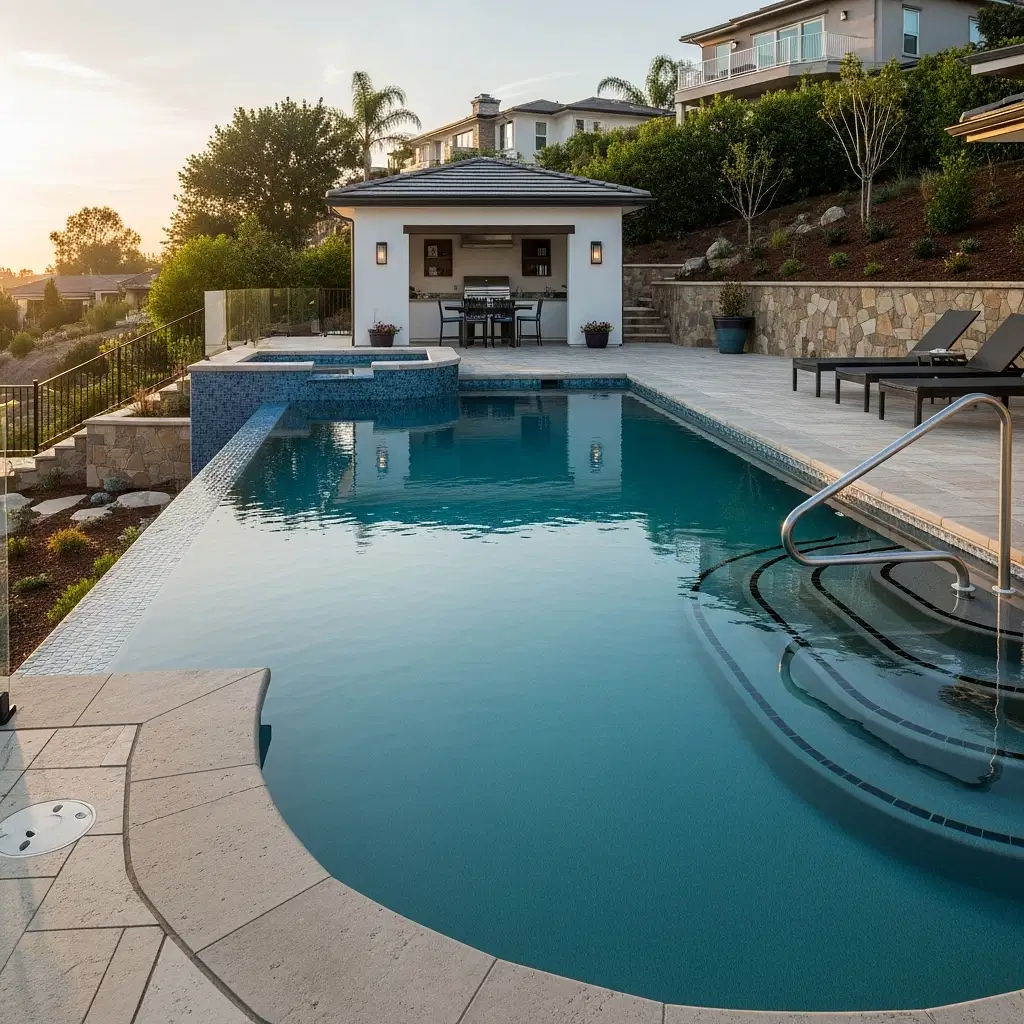
One of the most common questions we receive is whether you should be building a retaining wall before or after a pool. The honest answer is that it depends on the specific layout of your property, the severity of the slope, and the access points to your yard.
In many cases, building the retaining wall first is necessary to establish the grade. If your property slopes steeply downward, a wall must be constructed to create a level shelf of land where the pool will eventually sit. Establishing this barrier early ensures that the surrounding soil is stabilized before any deep digging occurs. Conversely, if the pool is being cut into an upward-sloping hill, the excavation for the pool and the wall might happen simultaneously to carve out the space, with the wall being built immediately after the earth is moved to prevent erosion and collapse.
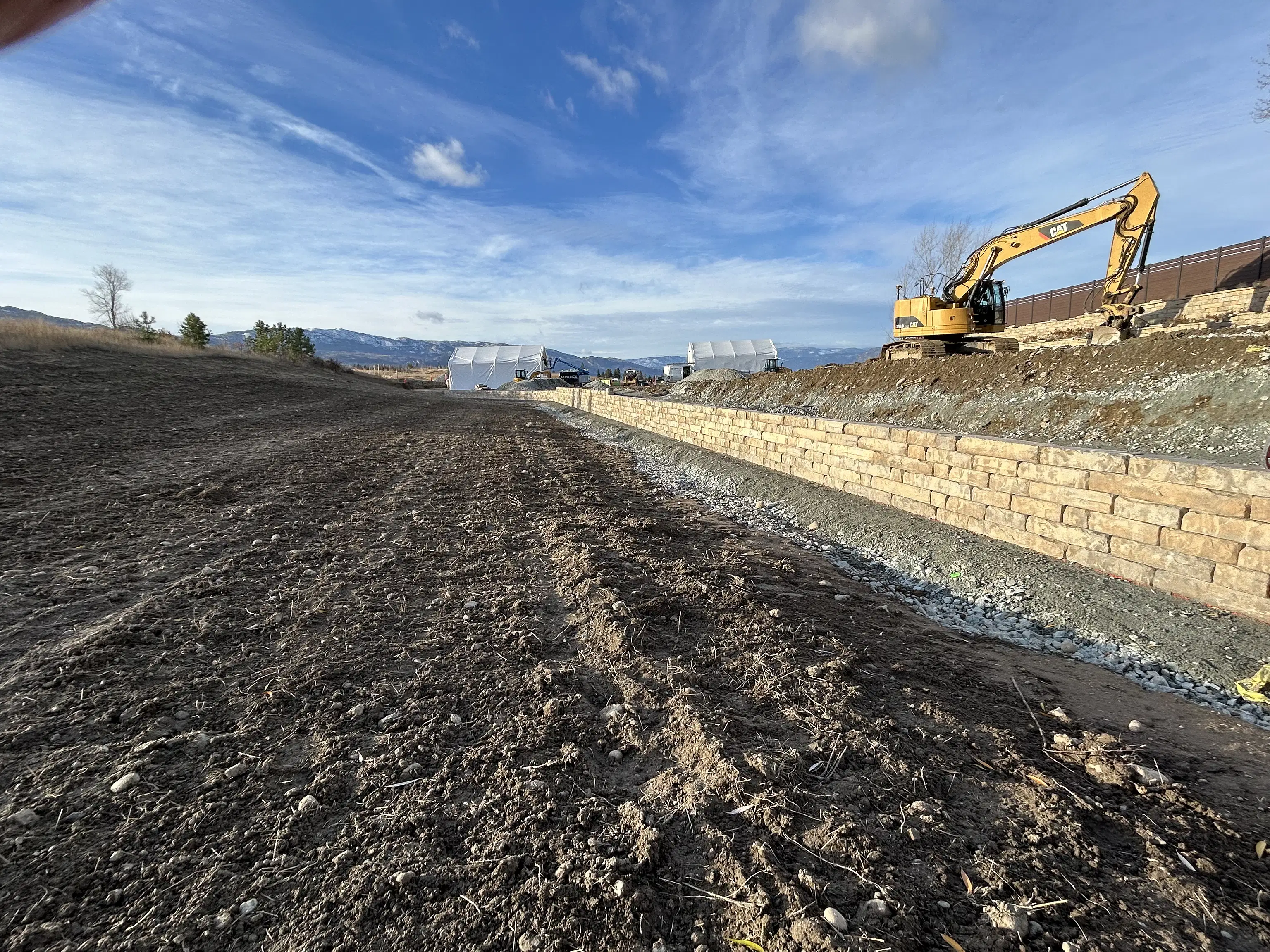
Accessibility is another crucial factor. Heavy machinery, such as excavators and skid steers, need room to maneuver. If a retaining wall blocks access to the pool site, the pool basin might need to be dug and formed before the final courses of the wall are completed. This careful dance of heavy equipment requires meticulous planning. Navigating this sequence correctly prevents project delays and ensures that neither structure compromises the integrity of the other.
Ensuring Proper Pool Excavation Retaining Wall Structural Support
The weight of an inground pool filled with thousands of gallons of water is immense. When you combine that with the natural pressure of the earth and the heavy clay soils often found in The Interior, the need for robust engineering becomes non-negotiable. Proper pool excavation retaining wall structural support is critical to the longevity of your investment.
At Acland Contracting Inc, retaining wall construction represents over 90% of our business this year alone. This specialization means we intimately understand the physics and engineering required to secure a slope safely. A wall built near a pool cannot just look good; it must be structurally sound to handle the lateral earth pressure and the hydrostatic pressure from groundwater.
We prioritize comprehensive drainage solutions behind every wall we build. Without proper drainage, water can pool behind the wall, creating immense pressure that can lead to bowing, cracking, or catastrophic failure. We incorporate high-quality drainage rock, perforated weeping tiles, and proper grading to direct water away from both the wall and your pool basin. Furthermore, many of these structural walls require a municipal permit and sign-off from a geotechnical engineer. We help our clients navigate these local regulations to ensure complete compliance and peace of mind.
The Secret to Success: Coordinating Pool Builders and Hardscape Contractors
A major backyard transformation usually involves multiple specialists. You will have a team handling the fiberglass or concrete pool installation, and you will have landscaping companies managing the earthwork, walls, and surrounding patios.
Coordinating pool builders and hardscape contractors is often the most stressful part of the process for a homeowner. Miscommunication between different trades can lead to costly mistakes, such as a pool deck that doesn't properly align with the top of the retaining wall, or drainage systems that conflict with pool plumbing.
To avoid these pitfalls, collaboration must begin during the design phase. We always recommend bringing all contractors together for an initial site meeting before a single shovel hits the dirt. This allows everyone to agree on the exact elevations, timelines, and responsibilities. As professional landscaping services providers, we pride ourselves on seamless communication not only with you, the homeowner, but also with any other trades working on your property. We establish clear boundaries of work, share our 3D design renderings, and ensure that our construction schedule perfectly complements the pool installation timeline.
Incorporating Smart, Eco-Friendly Design
Today's homeowners are increasingly conscious of sustainability and long-term maintenance. When planning your pool and hardscape layout, it is the perfect time to think about eco-friendly choices that complement the local environment.
With our hot summers and strict municipal water restrictions, surrounding your new pool and retaining walls with water-wise xeriscaping is a brilliant move. We recommend using native, drought-tolerant plants that thrive in our local climate without needing constant irrigation. Additionally, utilizing permeable paving stones for your pool deck allows rainwater and splash-out to naturally filter back into the ground, reducing runoff and easing the burden on your drainage systems. Choosing heat-resistant hardscaping materials also ensures that your pool deck remains comfortable to walk on barefoot, even on the hottest July afternoons.

Bringing Your Vision to Life
Adding an inground pool and a structural retaining wall is a significant investment that adds incredible value and enjoyment to your home. While the logistics of coordinating heavy machinery, permits, and multiple contractors can seem daunting, having an experienced team by your side makes all the difference.
At Acland Contracting Inc, our process is designed to eliminate the guesswork and provide a transparent, high-quality experience. It starts with an on-site visit and budget analysis, followed by detailed 3D design rendering so you can visualize the final result. Once the contract is set, we maintain continuous communication with you throughout the build to ensure top-tier quality control and on-time completion.
If you are planning to upgrade your outdoor living space with pools and the necessary structural support, don't leave the details to chance. Reach out to us through our contact page to schedule a consultation. Let's work together to build a safe, stunning, and enduring backyard oasis that you and your family will enjoy for decades to come.